EN
EN


As medical devices continue to evolve toward greater precision, intelligence, and diversification, flexible conductive technologies are becoming a critical enabling foundation for innovation. In areas such as brain–computer interfaces (BCI), active medical devices, and electrophysiology, increasing clinical demand for efficient diagnosis and precision therapy is accelerating their adoption.
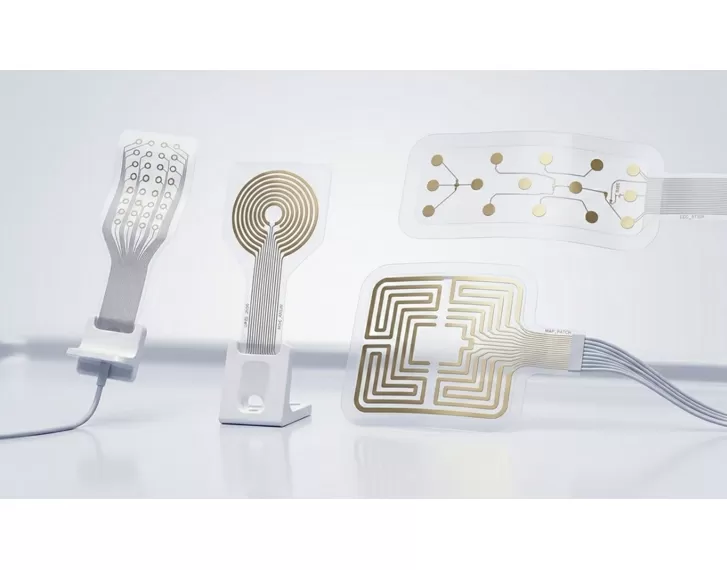
As medical devices continue to evolve toward greater precision, intelligence, and diversification, flexible conductive technologies are becoming a critical enabling foundation for innovation. In areas such as brain–computer interfaces (BCI), active medical devices, and electrophysiology, increasing clinical demand for efficient diagnosis and precision therapy is accelerating their adoption.
By engineering functional coatings that combine high conductivity, mechanical flexibility, and resistance to physiological environments, this technology ensures stable performance under dynamic conditions such as bending and stretching. It provides essential support for accurate diagnostics and intelligent monitoring, while enabling medical devices to evolve toward greater compatibility with biological systems.

Dynamic Conductivity with Mechanical Stability
Combining electrical conductivity with flexibility, a short-chain polymer matrix embedded with low-resistance nanoparticles forms micro-scale conductive pathways, achieving semiconductor-level resistivity. The material maintains stable resistance after 30% tensile and bending cycles, making it suitable for wearable deformation, organ motion, and complex luminal environments.

Biocompatible Interface
Surface modification provides antifouling and anti-adhesion properties, reducing non-specific protein adsorption by over 80%. With low sensitization and non-irritating characteristics, it is well suited for applications involving direct contact with biological interfaces, such as wearable sensors and implantable electrodes.

Broad Process Compatibility
Compatible with a wide range of coating material systems and processes, including ultrasonic spraying and micro/nano dispensing systems. Enables precise control of coating length, thickness, and uniformity, supporting long-range, fine conductive pathways on device surfaces. The material also offers hydrolysis resistance and anti-aging performance for long-term stability.
Wearable Medical Devices
Physiological Monitoring: ECG patches, EMG sensors, EEG headbands, respiratory monitoring belts
Non-invasive Biosensing: Flexible glucose monitoring patches, sweat electrolyte sensors, non-invasive SpO₂ wearables
Wearable Therapy: Flexible TENS patches, smart thermal therapy patches, portable defibrillation electrodes
Brain–Computer Interface (BCI)
Invasive: Flexible neural electrode arrays, deep brain stimulation (DBS) electrodes, ECoG electrodes
Non-invasive: Flexible EEG caps, dry electrode patches, wearable EEG sensors
Intraluminal Electrophysiology & Interventional Devices
Gastrointestinal: Esophageal motility electrodes, colonic electrophysiology catheters
Urogenital: Bladder EMG monitoring catheters, uterine EMG electrodes
Respiratory: Airway smooth muscle EMG probes
Other Luminal Systems: Biliary, pancreatic duct electrophysiology devices
Contact SILVERMARS for More Information
Email:
info@sk-silvermars.comTel:
+8618051486711Address: